skip to main |
skip to sidebar
This final part of Question 1 will look at the mise-en-scene and location of the performance shoot, and how this plays a huge part in the look and feel of our video, as well as a brief look at the relationships between the performers on-screen.
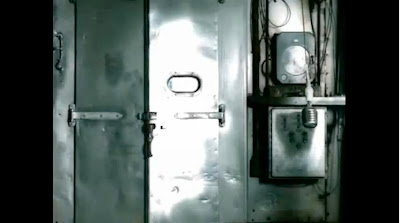
First, let's take a look at the location - the warehouse in which we shot the video. Below is a nice shot which really captures the corrugated metal roofing of the warehouse.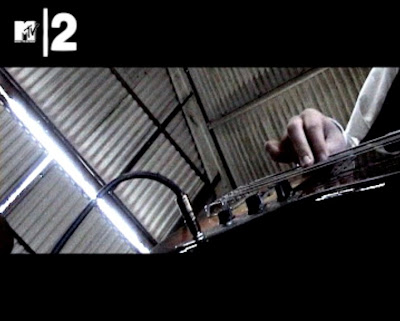 Now, you can see here how the cold grey colour of the warehouse itself seems to match in when the colour overlay has been applied in such a manner, and the tough, almost industrial, look to the surroundings does match the performance shoot style, with the silvers and blacks of the equipment and instruments blending in nicely. It helps to build the overall feeling of coldness which we really hoped to get from the song. Now, warehouses aren't tremendously prevelant in rock music videos, but the idea of gritty, industrial-type locations is, however. Below are two examples: The Offspring's 'Gone Away' video and Linkin Park's 'One Step Closer' video.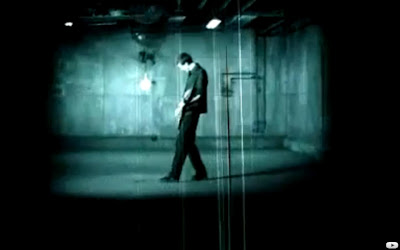
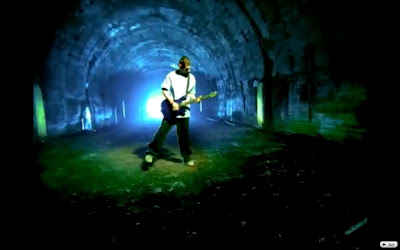 As is evidenced by these shots, the cold greys and dark, dull colours do help to accentuate any light that is around, so therefore, the natural light coming through the gap in the door of the warehouse in our video glows a little more, and a similar effect is achieved in the Gone Away video with the swinging lightbulb. It also perfectly suits our colour overlay modification, as the already cold surroundings are further emphasised and blended in with the performers and instruments to give an all-over cold, emotionally downing look.
The one variation we included in our video from the location was the inclusion of the battered wood boards on the floor of the performance, as can be seen clearly in these shots.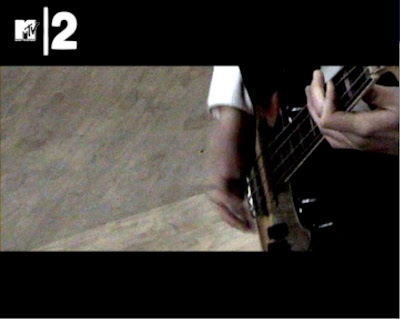
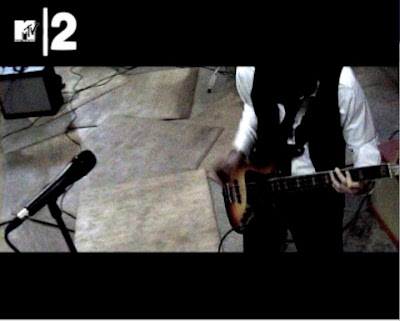 Now this is more unusual, but we decided this would help us give our a video a slightly more unique look, whilst still adding more to the cold, battered, gritty feel of the location. It was a spur-of-the-moment thing to include the boards, and I'm glad we did - they really do add a little unique slant to our location, without, as I say, taking anything away from the rest of the location and the cold, industrial vibes.
Another type of shot, seen very frequently in rock music videos, that we decided to use more sparingly, are shots where two or more performers are shown, with one performer in clear focus with perhaps others in the background. One video where it is used frequently is the video for 'No One Knows' by Queens of the Stone Age, and some exemplar shots are shown below.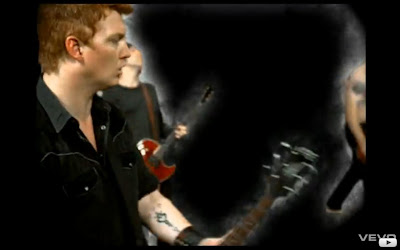
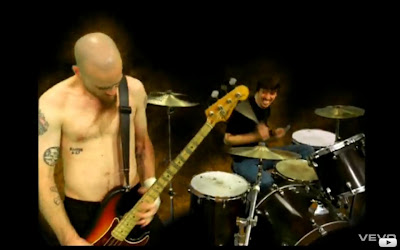
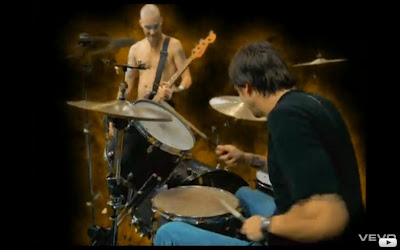 What this does is give a heightened sense of spacial awareness, and gives a sense that the performers are tightly-knit and all playing close together, as well as having a telepathic link to each other as a band, performing as a true unit. It also does give a sense of heightened importance to the performer in the foreground, almost like he or she is leading the rest of the band. Below are several examples of it's usage in our video.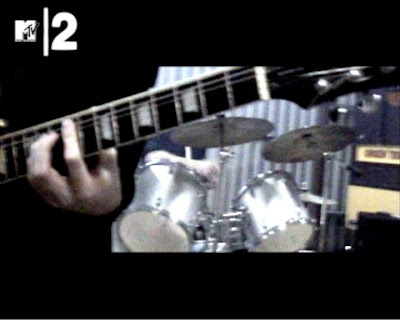
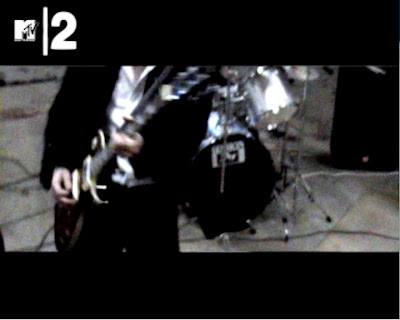
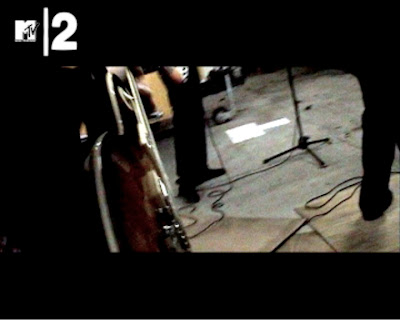 In conclusion, our video uses lots of already existing media conventions of a rock music video, but subtly alters and challenges some of them and successfully manages to mix established traditions and conventions of music videos with a unique look and style we have created with our video.
This concludes Question 1.
I will start Part 2 by looking at a very common technique seen in countless rock music videos, as well as music videos in other genres - prevalent shots of the performers and the instruments being played.
Now, there are three mild variations on this, often all being used in the same video at once. The first type revolves around showing both the performer and the instrument being played all in one shot, to show complete movement of the performer and show him/her in complete control of the instrument. Below is an example from our video. 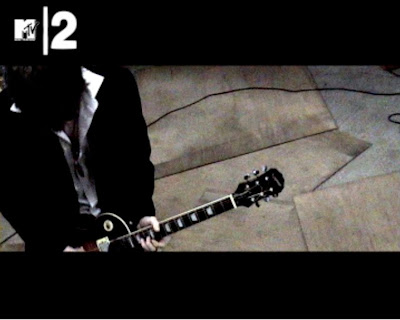 The majority of the guitarist is shown in this shot, showing his movement and energy in playing the song, as well as the full extent of his clothing. The upturned collar, and the undone top buttons on the shirt showing a great mix of smart attire and very casual appearance and demeanour. The colour overlay is in evidence again here, as you can see the sunburst colour of the guitar is minimised and darkened. The advantage of using a full shot such as this means that the viewer can see the performer's emotion in playing along with his technical skill and proficiency with the instrument in relation to one another. Below are a few more examples of this, the first coming from Green Day's 'American Idiot' video and the second coming from Rise Against's 'Re-Education (Through Labor)' video.

The one tradition we do break from here, as you can see from the example shots, is that these shots commonly seem to use low-angle shots, to give the performers a sense of real presence and dominance. We revert this by using high-angle shots predominantly to give a greater sense of space and a feeling that the viewer is almost like a 'fly-on-the-wall' to this performance. However, as you will see when I continue on to the other types of performer shots, we do use low-angle shots more prevalently.
Speaking of which, I'll now move on to the second variation - extreme close-ups of the performer's instruments and the performers actually playing them. Below are multiple examples from our music video, involving the guitarist, bassist and drummer.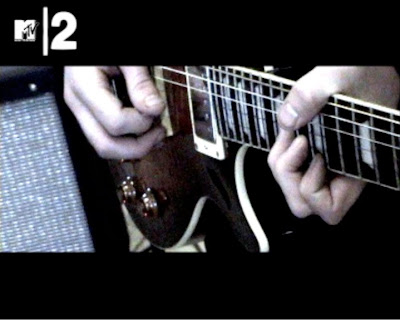
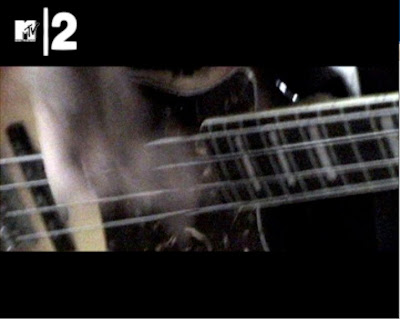
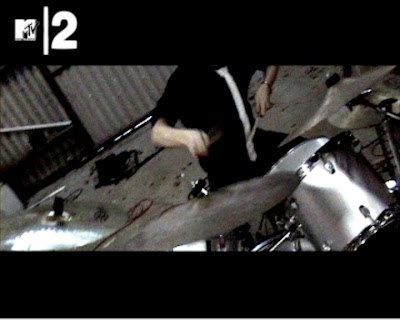 This is another record company driven convention, mainly, and it is understandable, as it is designed to show that the performers have high levels of technical proficiency with their instruments. By showing close-ups of the performer's hands playing the instruments, this demonstrates high-energy and technically skilled playing of the instruments. Below are several more examples from our video of this technique.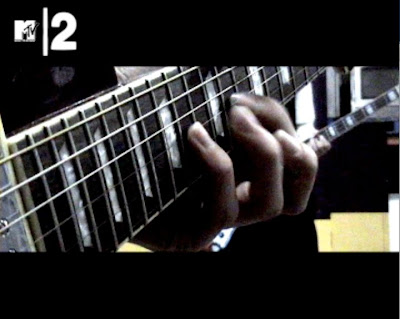
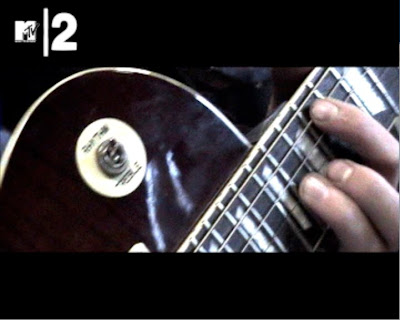
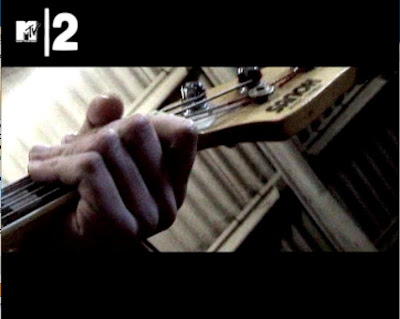
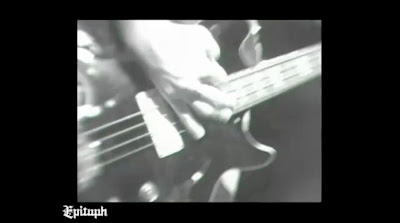
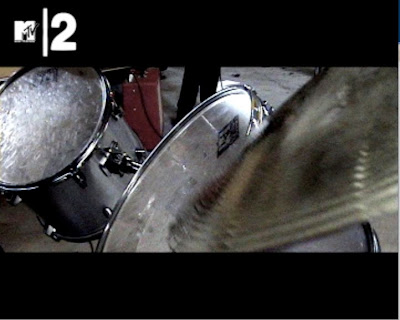 These shots, particularly in this case the close-up shots of the fretting of the solo section and the close-up shot of the cymbal being hit, can serve a dual purpose - not only can show technical skill, as mentioned above, but they can also be used to emphasise certain aspects of the song; for example, the close-up of the fretting of the guitar can emphasise the solo and the skill of it, and the close-up of the cymbal being hit hard can be used to effectively accentuate crashes and transitions in the song, by using quick cuts and fleeting shots right on the beat. Below is a real-world example of this type of shot, which has been taken from the music video to Bad Religion's 'New Dark Ages'.
 The third and final variation on this type of shot are shots focusing entirely on the performer's face, with maybe some snatches of their instrument in the shot too, but the main focus of the shot is centred entirely on the performer's face to show the emotion in his face. Here are several examples from our video of this type of shot: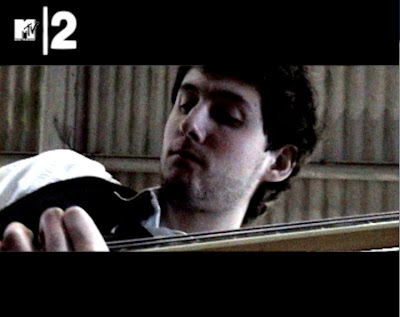
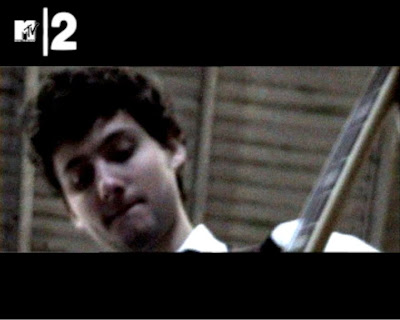
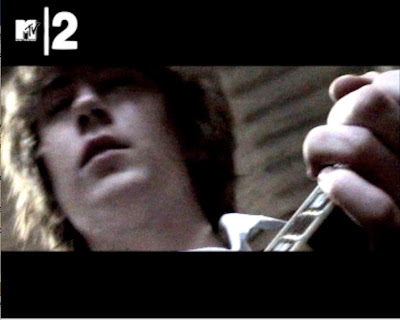
As you can see, this accurately portrays the performer's emotions when playing the song. There are definitely differing emotions and body languages in the performers; in my mind, the bassist looks like he is calmly focused on the performance and playing of his instrument, and the guitarist fits his clothing style, in that he looks cool, casual and unflustered. Now, what is important here is to reflect on the emotions - although the song is energetic and rocking to a certain extent, there is still an element of atmosphere and mild restraint, significantly in certain parts of the song, such as the verses and the bridge - it is the sort of song where the blasts of pure all-out energy are not common across the entire song, but the energy ebbs and flows, and increases the impact of the high-energy sections of the song. Ergo, it is important that a degree of restraint is shown by the other members, as the singer, as we have already seen, is an energy-charged frontman, so therefore this must be tempered by his fellow bandmates.
That concludes Part 2.
In what ways does your media product use, develop or challenge forms and conventions of real media products?
Our project was an entire promotional package for a new rock music album by the band AFI, with the central focus being on creating a promotional music video for the first single for the album to be sent out to all major music video channels (MTV, Kerrang!, Scuzz, etc.). Within this, there were many conventions of existing music videos that we followed, but equally, there are also certain conventions that we challenged in order to create something unique and truly set it that much apart from videos and media products typical of the rock music genre. We were careful to balance this line between following established conventions and breaking away a little and doing our own thing, and I'm very happy to report that, in my opinion, I believe we achieved this well. I will look at a number of different shots from the video which illustrate this, starting with the first one below. I will also draw in other shots from throughout the video which are similar or help illustrate the point, as well as shots from existing music videos of the genre, to show how we have either followed or challenged existing conventions.
To start, lets have a look at this shot of the microphone from the very start of the video. 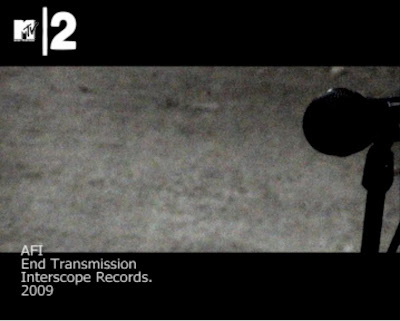 A shot of solely the microphone is a classic shot featured in many rock performance videos, and is often used, occasionally with shots of the equipment around the band, to set the scene and introduce to the viewer that it will be a performance video. It also gives the mise-en-scene (in this case, the equipment) a certain energy about it, and a sense of anticipation that, at any second, the performance will kick in and the performers (which we haven't seen directly yet in the video) will crash into life. Below is another shot taken from the start of our video, this time of the guitarist's amp from a high-angle shot.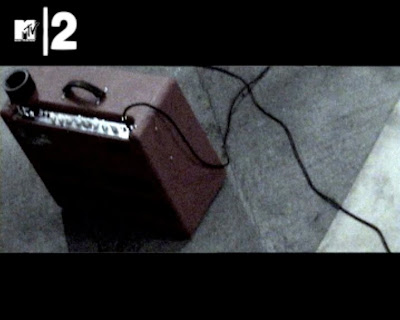
In this shot, the colour overlay effect can really be evidenced for the first time, giving the concrete floor a really cold feel to it, which matches back to our genre of music - not necessarily the rock music genre, but more the goth music genre, of which AFI are a part of. Below are two examples of using the microphone shot I explained above in existing videos, the first shot being from AFI's 'Medicate' video, and the second taken from the music video to The Offspring's 'Gone Away'.
Next, I will take a look at several shots of the lead singer. It is a common convention of music videos across the genres that the record companies often demand lots of shots of the lead singer in a band, sometimes to the detriment of the rest of the band. The point of this is that the lead singer is often the main focal point of the band to the media and in promotion, so heavy exposure of him is often requested in videos. Below is one shot in particular of the singer. 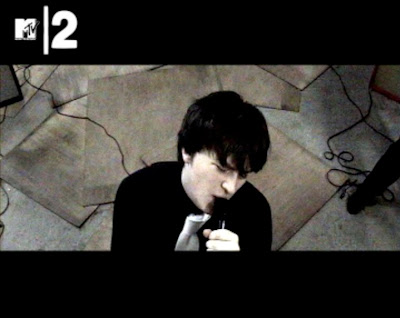
This shot demonstrates several key conventions. Not only does it follow the convention I outlined a moment ago, but it also uses several others, chief of which is that of the singer showing real emotion in his or her singing. As you can see here, the singer is so immersed in the song itself that his eyes are closed and he gives a sense that he is almost lost in the song itself, further emphasised by his body language as he clutches the microphone. Below is another shot showing an example of the energy exuding from the singer, as he moves his body frantically in time to the music. 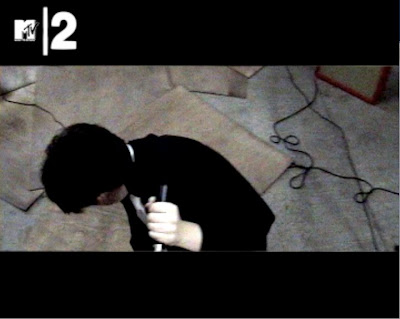 Also, the high-angle shot down onto the singer is a classic rock music camera angle, and it allows the viewer to show the movement and energy of the singer well. Below are several examples of this, including another shot from the 'Medicate' video, and two other examples: Foo Fighters' 'All My Life' and The Offspring's 'Can't Get My Head Around You', two other modern rock music videos.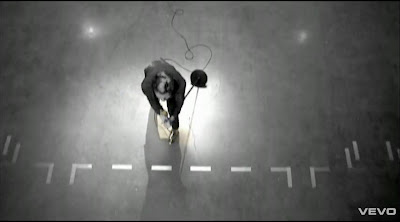
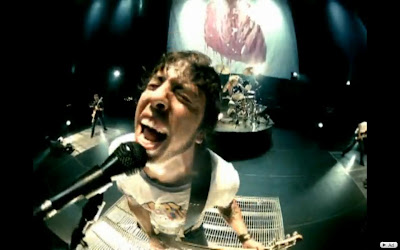
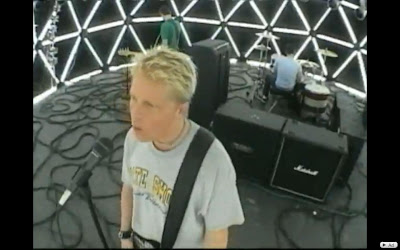
What these shots of the singer also show are the wooden boards that we laid on the floor for the shooting, and they really come into the fore in these high-angle shots. They further emphasise the already gritty, quite cold look that has been achieved by the grey concrete of the floor and the colour overlay we implemented. Also, leads and other equipment are sighted in the background of these shots, which gives the viewer a certain spacial awareness - it demonstrates the size of the area that the band are performing in, and by keeping the band relatively close together, it shows an intimacy, unity and tightness to the band and their performance. Below is another high-angle shot which demonstrates this well, showing the drummer and other members. 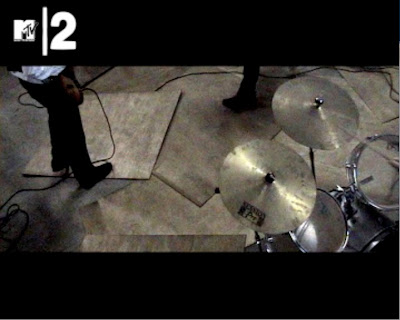
Another shot relating to the singer is this shot here, showing a close up of the singer and in particular, his mouth. This is another relatively common technique, and further emphasises the emotion and energy evident in the singer's performance. However, we did go against this convention to a certain degree, as it is often more common to show the whole face in a portrait format - in our video, however, we show mainly the mouth, along with parts of the upper body, in order to show the flamboyant movement of the singer's arm in time to the lyrics and the song.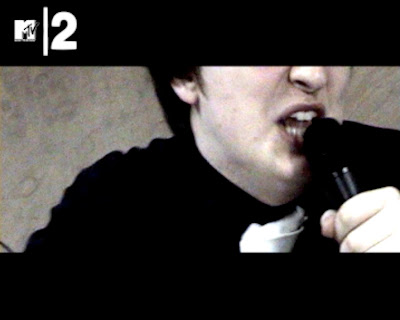
Emotion is prevalent in the other performers too, as this shot of the bassist shouting backing vocals with real vigour demonstrates. This helps to add to the backing vocals and give them more size and energy than normal, even though there is no actual difference to the backing vocals on the song. It embellishes them with more energy, and it keeps a unity to the band by using a similar camera angle as the singer. Below is the shot in question, and below that is an example of this technique in the video for AFI's song 'Miss Murder', where the bassist is shown furiously shouting the 'Hey!' in the chorus section.
This concludes Part 1 of Question 1.